
Azteca As Is. 18-23
Book II - CORTES EXPEDITION TO YUCATON COZUMEL, TABASCO - INGRESS TO MEXICO AT VERACRUZ
The four options for police are (1) peace or reconciliation, (2) giving gifts or aid, (3) punitive use of force, (4) sowing dissension and subversion. Kautilya’s shagunya theory defined the spectrum of peace to war, neutrality, alliance, coercive diplomacy, diplomatic double game.
Bakshi, G D. Indian Strategic Culture : Mahabharata & Kautilyan Ways of War. www.garudabooks.com, Garuda Prakashan Private Limited, 2024.
INTRODUCTION
At the end of his life Bernal Diaz recorded his experiences as a conquistador in Meso-America at the time of Spanish Aztec conquest. The modern adaptations of Conquistador life as recorded by Bernal Diaz and Pedro de Cieza fall on https://crackpot.substack.com/t/incadinca
1 CAPTAIN CORTES TAKES THE FRINGE
CAPTAIN HERNAN CORTES: Remember when they yelled ‘castilan! at us in Campeche? We should find out what they mean.
Through inquiry and interpreter, we soon learned that the Indians had two Spaniards kept as slaves. Cortes thought to have them freed. One named Jeronimo de Aguilar was freed for a string of beads. The other man, named Gonzalo Guerrero, refused to leave.
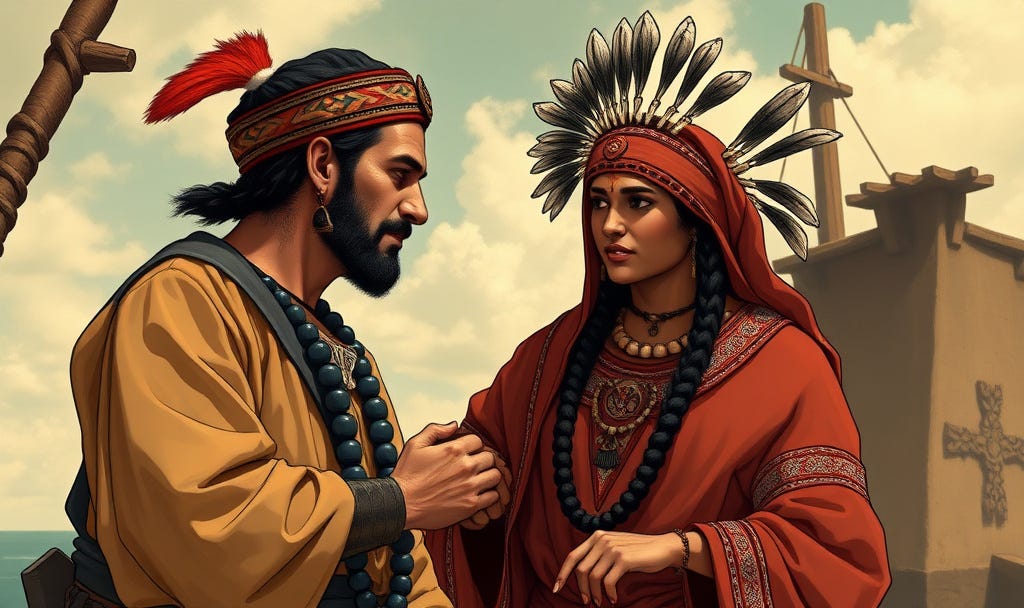
JERONIMO DE AGUILAR: Come on, man. Let’s go. Cortes has us freed.
GONZALO GUERRERO: My friend, You go. I cannot leave. My face is tattooed. My ears are pierced. I am married with three handsome boys. Give me the beads you have brought.
GONZALO’S INDIAN WIFE: Why is this slave talking to my husband? Off you go. Don’t trouble me with any more words.
Cortes was displeased. With nothing more to do we sailed away.
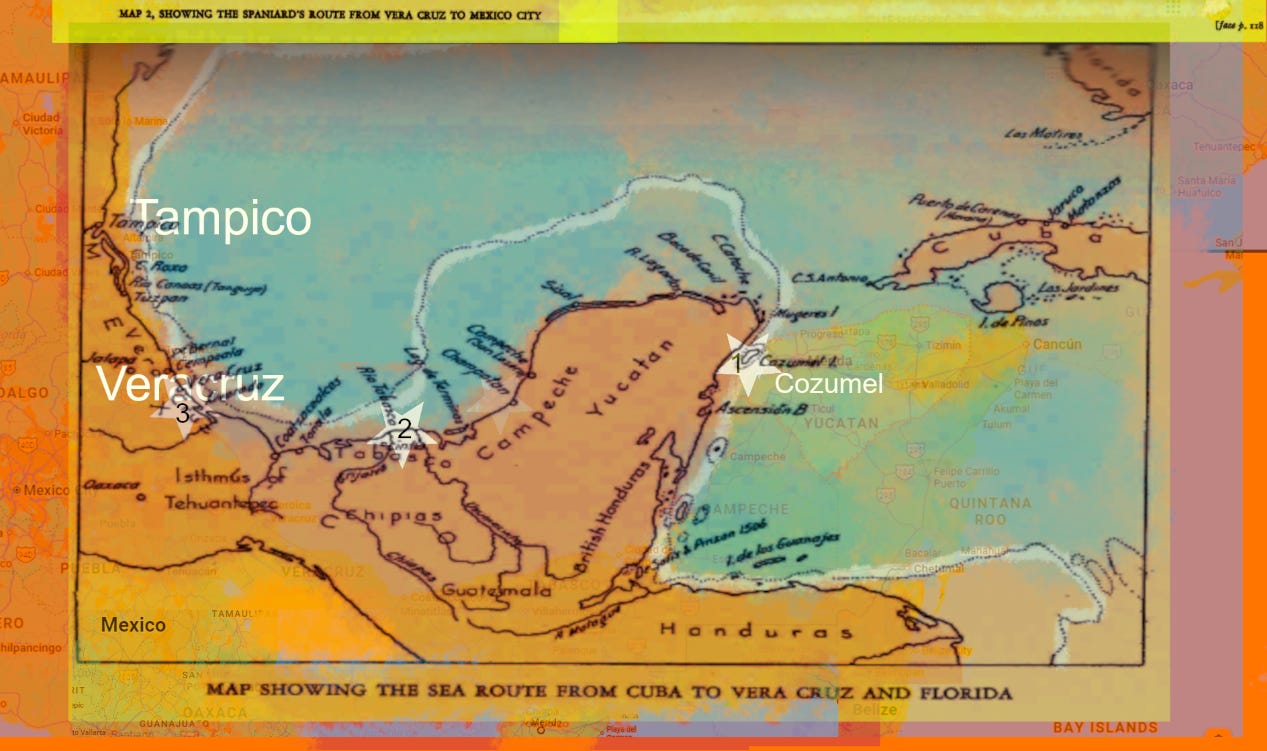
We went to Cozumel first to reunite Jeronimo de Aguilar with his people and repair one of our ships from sinking. Jeronimo’s old mates did not recognize him, they asked, “where is the Spaniard?” Aguilar proved to know almost nothing about the people he lived with, toiling as a slave, but Cortes made use of him by posing as an Indian to eavesdrop on the Velasquez partisans on his ships. Thinking he was an Indian of no consequence squatting on the floor, they conspired away in Spanish.
2 RIO DE GRIJALVA
On March 4, 1519, Cortes ordered us to sail at night by lantern light. In 8 days we arrived at Rio de Grijalva.

We anchored our ships at sea then from smaller vessels and boats we soldiers landed at Cape of the Palms, near the town of Tabasco. The river, riverbanks and mangrove swarmed with warriors. The people of Champoton and Lazaro and other towns looked down on our new friends from Tabasco as cowards. They bragged about the 56 Spaniards they killed when we came with Captain Hernandez.
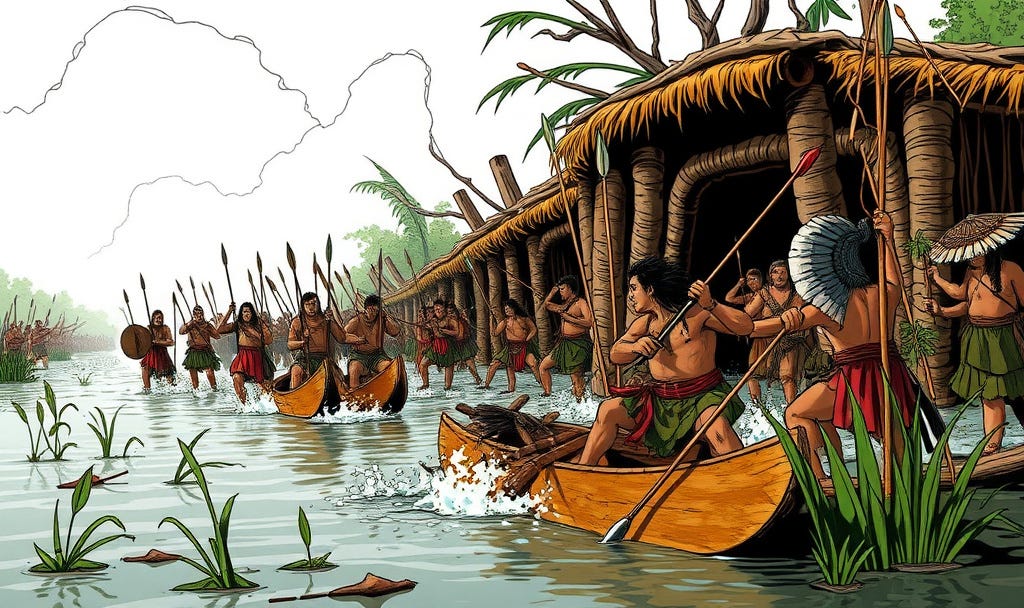
Talk turned harsh with threat. The people told us we were not allowed in their towns. When Cortes saw things begin turning ugly, he ordered cannon into the boat and crossbowmen and musketeers to ready arms. Cortes battle plan: he ordered 100 soldiers to attack the town from a path to one side of the town while he led a force who would approach in light vessels by water to attack the other side of the town. While we maneuvered and readied, the Indian warriors came at us in the mangroves in their canoes with fury to prevent our landing near the town. The riverbank was covered with warriors carrying their weapons, blowing trumpets, conch shells and sounding drums. Cortes told us to hold our fire and put overtures of peace on blast through our interpreter Aguilar.
AGUILAR: Water! Can we have water? Hello, friends.
The warriors loosed their arrows at us conquistadors. They beat their drums. They surrounded us in canoes. A shower of arrows kept water splashing in our face. We struggled through the mud and swamp while they fell upon us with lances and shooting arrows. Cortes lost his shoe. The warriors fell back upon stockades built of logs and brush. We pulled this apart and found the gateway to the town. We fought them street to street, through other defenses.
CONQUISTADORS: Santiago! Santiago!
WARRIORS: Al calacheoni! Al calacheoni! (Kill their captain!)
We were surrounded when Alonzo de Avila and his force rejoined ours. United we drove the warriors out of their strongholds. They retreated while returning showers of arrows and fire-hardened darts. Cortes ordered us to lay off after they evacuated the town, leaving its chambers and large halls, with three Idol houses, to us.
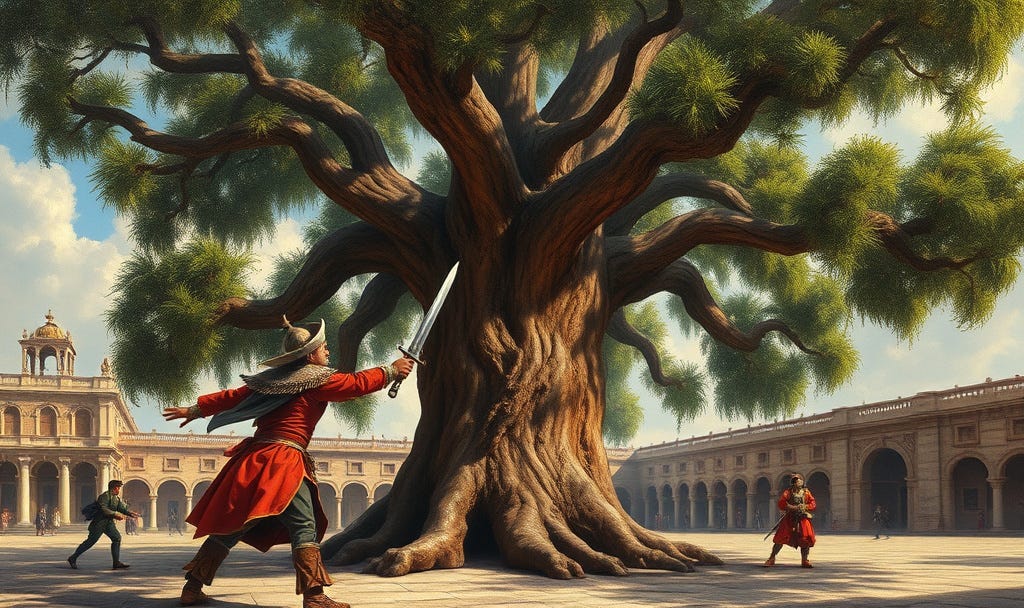
Cortes drew his sword and made three cuts in a huge Ceiba tree, which stood in the court of that great square of the city.
CAPTAIN HERNAN CORTES: For Spain!
CONQUISTADORS: For victory!
CAPTAIN HERNAN CORTES: For the Crown!
CONQUISTADORS: For God’s glory!
CAPTAIN HERNAN CORTES: For Governor Velasquez!
CONQUISTADORS: For us!
We were 14 wounded. We slept there in that square that night.
2 Overture 20 RIO DE GRIJALVA
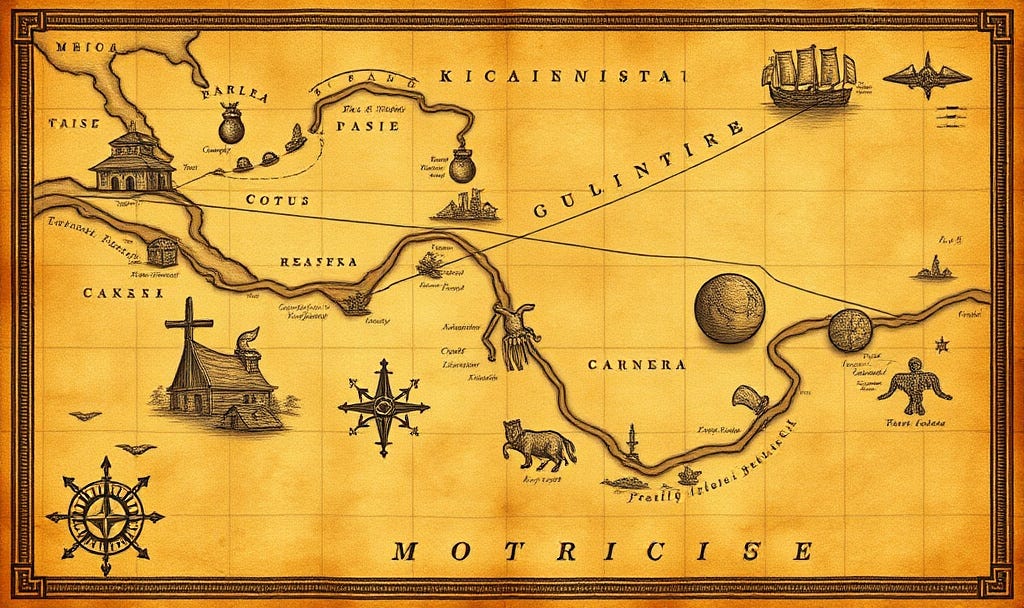
The next morning Cortes sent Pedro de Alvarado with 100 soldiers, 15 crossbow and gunmen, with Melchorejo the interpreter, to examine the country. Melchorejo had run off to Tobasco, leaving his Spanish clothes. Cortes sent Francisco de Luego in another direction, with 100 soldiers, 12 musketeers and crossbowman.
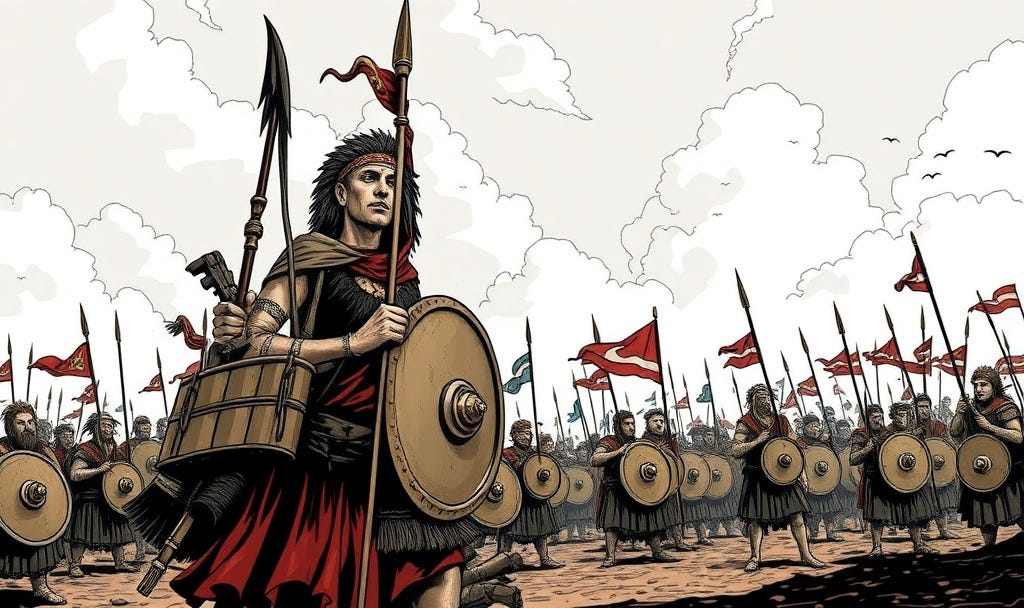
Francisco de Luego’s conquistador force met a host of archers carrying lances and shields, drums and standards. The warriors made straight for the soldiers, surrounding them. The warriors shot so many arrows it was impossible to withstand them. They hurled fire-hardened darts and cast stones from their slings in such numbers they fell like hail. They hacked our men with two-handed knife-like swords called Maquahuitls, edged with flint and obsidian.
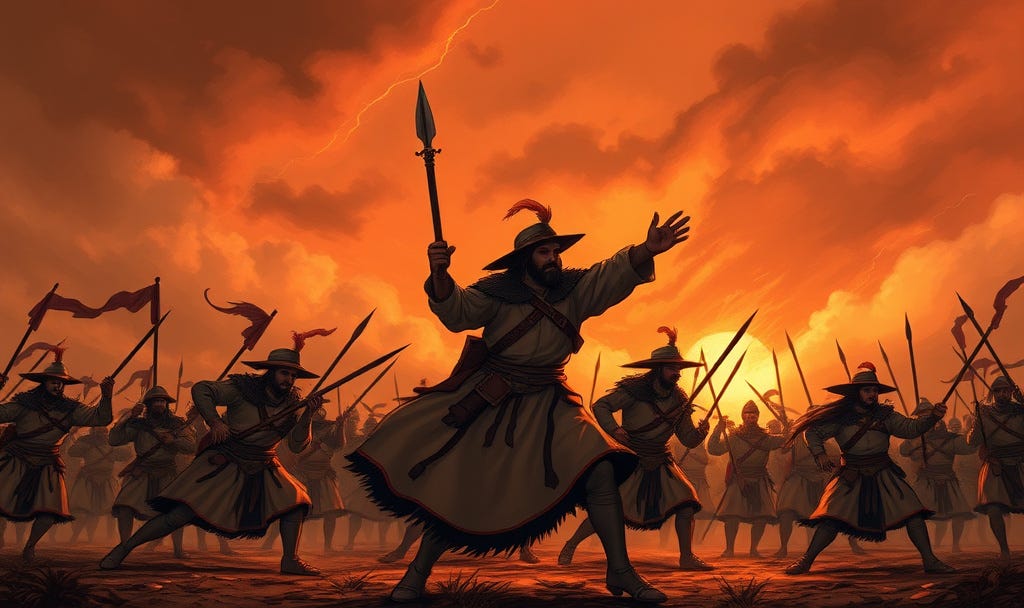
Pedro de Alvarado heard Francisco de Luego fighting from a distance and came rushing in to help. Once the forces united, they turned aside the warrior’s attack. The conquistadors fought their way back to camp with the Indian warriors fighting them every inch.
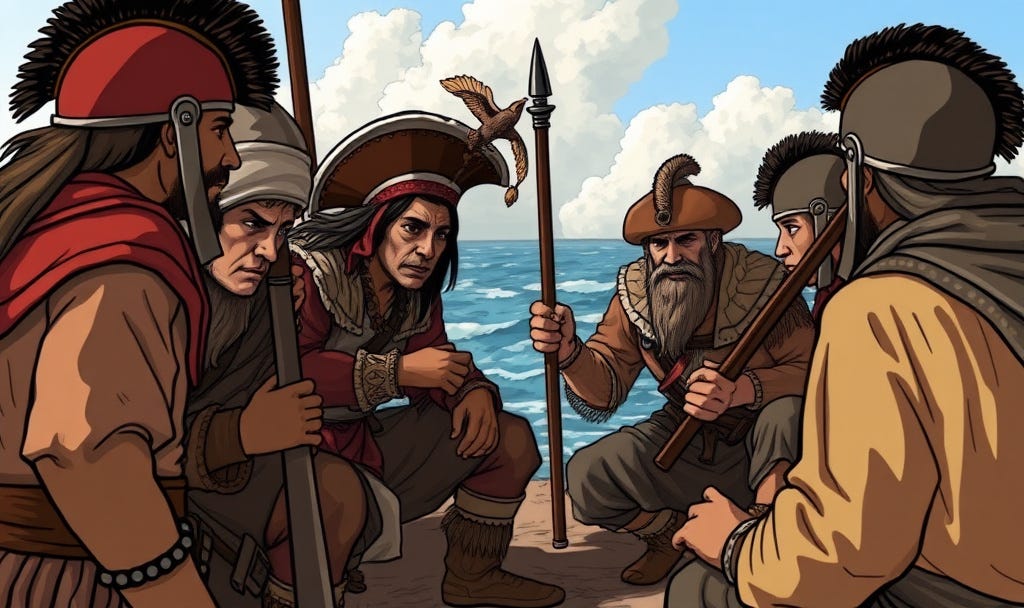
Cortes guarded our wounded at camp. There we drove off the warriors with guns and good sword play. 2 of Francisco de Lugo’s company were killed, 8 wounded, and 3 of Pedro’s company wounded. We captured 3 enemy and through Aguilar, our interpreter, we found out that Melchorejo, another interpreter that ran off, was inciting all the local people to come fight and kill us. When Cortes heard this, he ordered all the horses off the ships and for the crossbowmen and musketeers to ready arms.
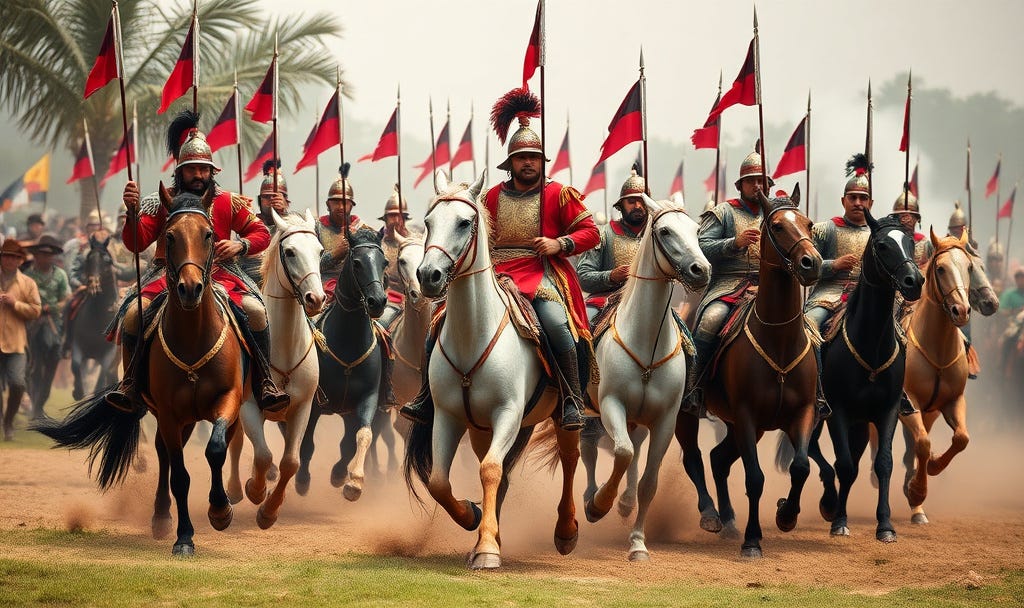
The best horses and riders formed a cavalry. The horses had little bells attached to their breastplates. The men were ordered to aim their lances at the faces of the enemy and not to slow down. The 13 cavalry were Captain Cortes, Cristoval de Olid, Pedro de Alvarado, Alonzo Hernandez Puertocarrero, Juan de Escalante, Francisco de Montejo and Alonzo de Avila, who rode Ortiz the Musician’s horse. Also Juan Velasquez de Leon, Francisco de Morla, Lares, Moron of Bayamo and Pedro Gonzalez. Cortes ordered Mesa the artilleryman to ready his guns. Diego de Ordas was in charge of us foot soldiers and he also had command of musketeers and bowman.
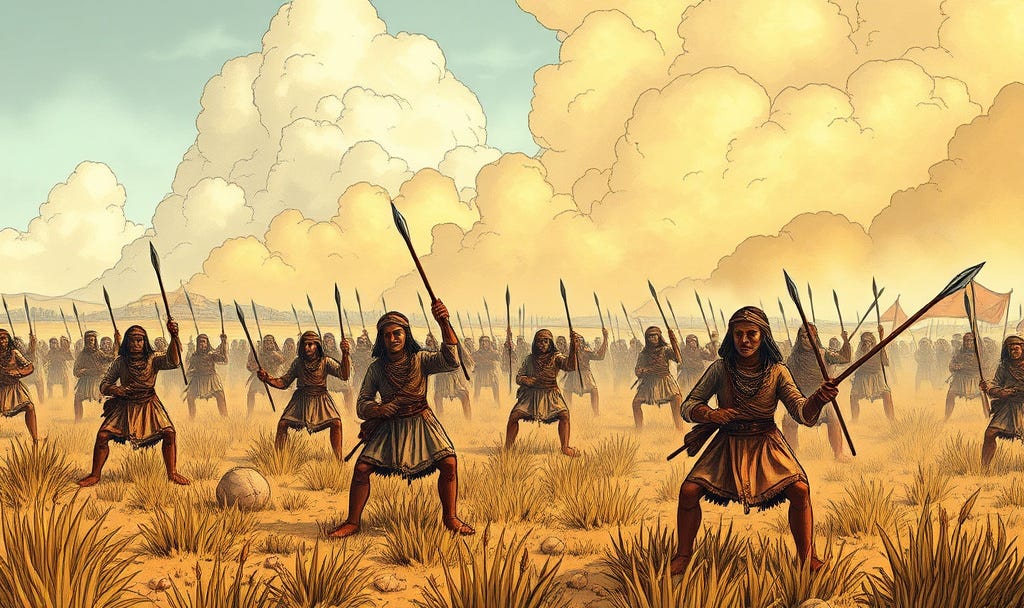
Early the next day we conquistadors said mass and marched. We passed through the savannahs where we faced earlier attack. We approached the town of Cintla. There we met on an open plain. The warriors were so numerous they covered the plain. They rushed on us like mad dogs. They showered us with clouds of arrows, javelins and stones. On the first volley 70 of us were wounded. Fighting hand to hand they did great damage with lances. One soldier fell dead from an arrow to the ear. With our muskets and crossbows and swordplay we kept them at bay. Mesa, our artilleryman, killed many of them with his cannon.
BERNAL DIAZ: We should charge.
DIEGO DE ORDAS: Yeah? There are 300 of them to 1 of us. We’ll be eaten.
BERNAL DIAZ: Yeah, well we should fight them up close. They don’t like our blades.
On this Senor Diaz and I agreed. We got in close to the warriors to give them a taste of Spanish steel. At this they broke and gave way.
When we fired shots the warriors sounded trumpets and drums and shouted and whistled and cried. They threw dust and rubbish into the air so we could not see them retreat.
WARRIORS: Alala! Alala!
Meanwhile, Cortes and the cavalry were not near for they had to find solid ground out of the swamp earlier. Now they had their way back to help us. The cavalry came charging, horses charging, riders spearing enemy warriors, forcing them to turn tail and flee. The warriors thought the horse and rider were all one animal, like a centaur, for horses they had never seen.
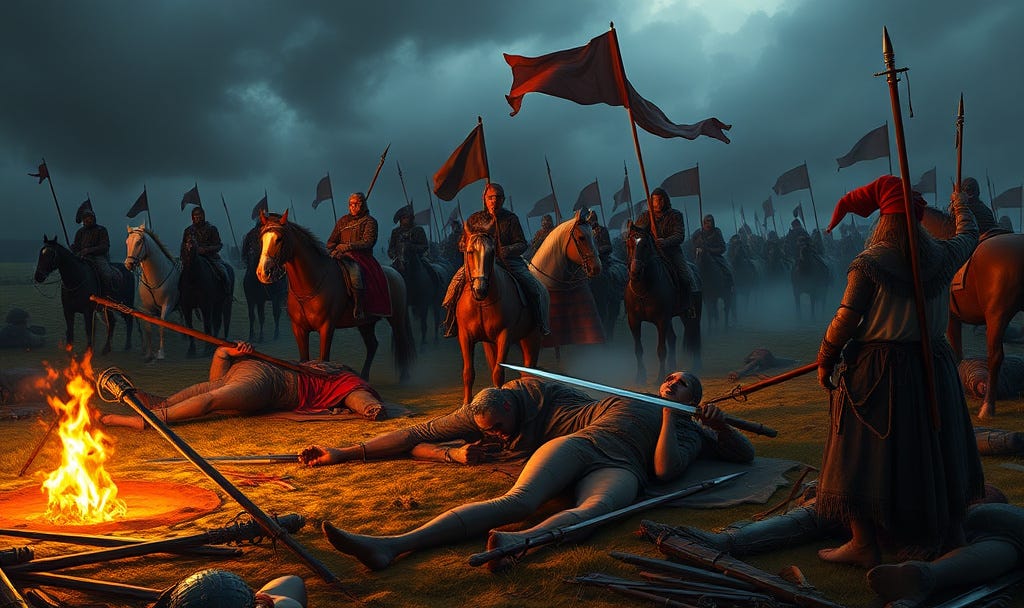
We doctored our horses wounds by searing them with fat. The plain was covered with corpses of warriors slain by sword thrusts, others by cannon, muskets and crossbows. Many were stretched and half dead. We took five prisoners. Cortes gave them blue beads and set them free to return to their chiefs with a message of peace. - Bernal Diaz. pg. 106
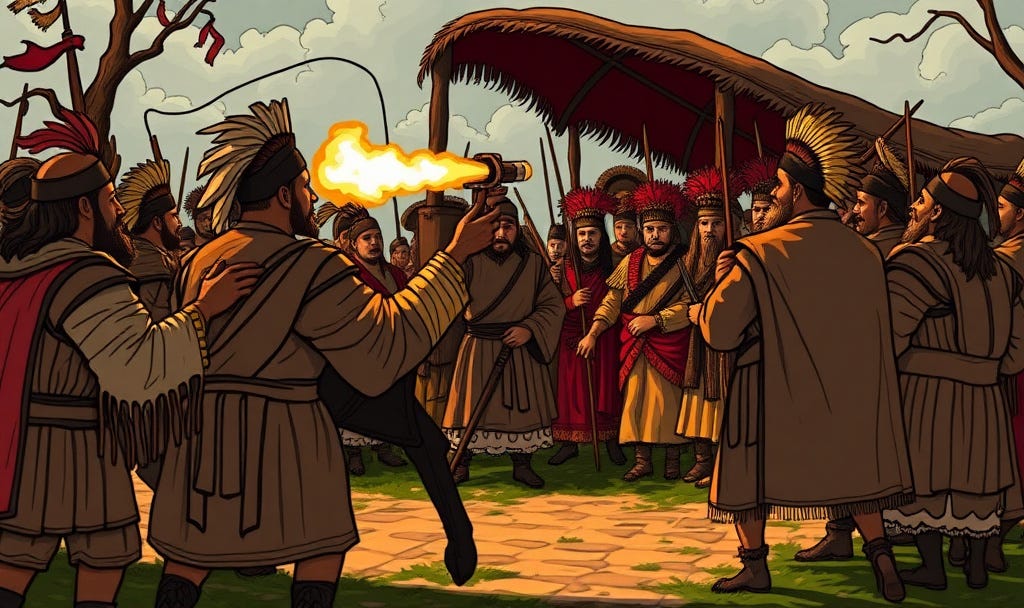
The next day 30 Caciques (chiefs) appeared with fowls, fish, fruit and maize cakes. They asked Cortes permission to bury their dead so they would not foul the air or be eaten by jackals, birds or jaguars. Cortes gave permission at once. Cortes noticed they feared the horses and he played a trick on them by bringing a stallion near a mare in heat. The caciques thought the pawing, snorting agitated beast was angry at them and begged Cortes to take it away. With a signal the mare was withdrawn and Cortes tamed the beast, cautioning the Indians not to make the horse angry again by attacking his men. More Indians arrived bearing gifts and pledging peace.
Cortes gathered the caciques and told them they were all vassals of the Emperor King Don Carlos. At this Cortes had a loaded a loud shot of powder and ball fired from a cannon over their heads to shock and awe the cacique assembly.
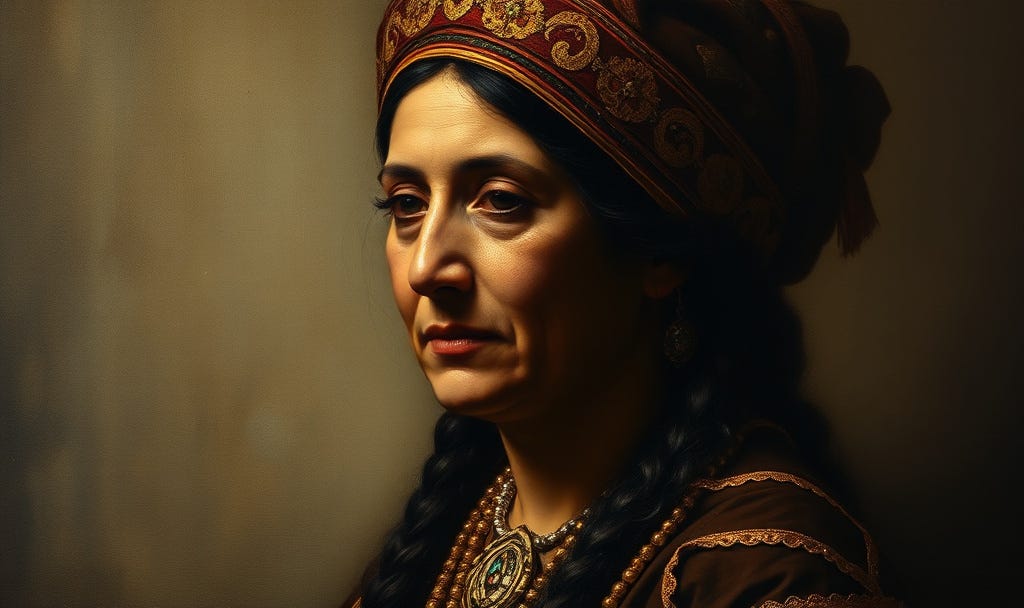
Over the coming days more and more people from Tabasco honored us with visits. Their gifts poured in and piled up. There were four diadems of gold, gold lizards, two ornaments like dogs, earrings and ducks, masks with faces, two gold sandals, and bolts of cotton cloth. We were also given 20 women, one christened Dona Marina foremost among them. Dona Marina first married Alonzo Hernandez Puertocarrero. When Pedro left for Spain, Dona Marina lived with Cortez. Soon she bore Cortes a son. Dona Maria knew the languages of Coatzacoalcos and Tabasco. Dona Maria served as chief interpreter for the conquistadors in the events to come. She told Cortes that before them, she was orphaned as a child, given to the Tabascans by the Xicalango, and then she became a mistress to the vassals of the province - given to many men.
Through Aguilar the interpreter, Cortes asked the chiefs to give up their idols and sacrifices. Cortes ordered Alonzo Yanez and Alvaro Lopez to construct a cross and establish it in the town. Cortes gathered the caciques and asked them the source of their wealth.
CHIEFS: We get jewels from Culua. Gold from Mexico.
3 Sacrificial Altar
With the Tarascan women married among the conquistadors, establishing friendly familial relationships among them with the local caciques and no more hostility felt, alliances established the conquistadors went next to Isla Verde.