

Linguistic Phonics Notes
As noted previously, recasting Algonquin languages from Romanized alphabetics to Sanskrit shows striking parallels. Quick linguistics note - the native American tribal languages split in the main to two families, Athapascan and Algonquian. To be precise, I speak specifically to the latter. This translation is not possible with Athapascan languages, like Apache speak. What this approach highlights is how phonetically similar Algonquian languages are to Sanskrit in sound structure.
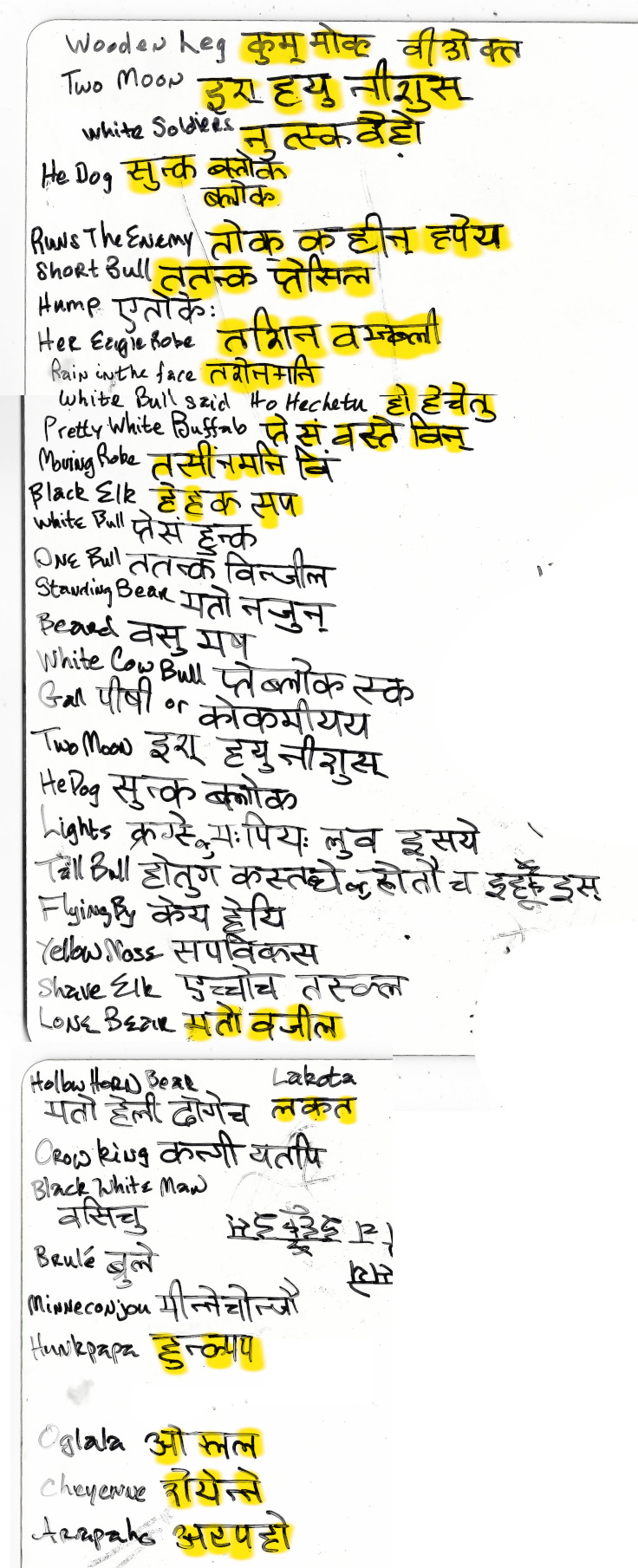
I translated the names of many heroes in this story to Sanskrit from the phonetic English. Below I attempted to illustrate how Sanskrit simplifies the language by highlighting the number of letters in the names when rendered to Sanskrit. The polysyllabic soup of English-ized native tongues gives way to 2-3 letter names. Hunkpapa boils down from 8 to 3. Two Moon reduces from 14 letters to 5 letters. Lakota reduces from 6 letters to 3.
Of particular interest is white soldiers. Veho is white man. Nutskavaiho is many white soldiers. This looks for all the world like an inflected language - where Veho is modified ai! for explanation inflected with nutska - soldiers. I have to study more of the linguistics to say - but without fail as reproduced below the names and words fall in. Brule goes from 5 to 2. White Bull has 4 letters in his name in Sanksrit and 12 letters in soupy English.
My question for the Lakota today is - have you considered other alphabets other than the White Man’s language to adopt literacy? It may not be obvious except to people with a few eccentric interest’s but Sanskrit seems tailor made to describe the Sioux and other tongues based on how it comes out in English.
Theories - Vedic civilization was a seafaring culture and travelled extensively in Asia. The story of America is likely far more complicated than we have evidence for - waves of migration from the Pacific Islands, Bearing Land Bridge, Greenland and Canada from the Nordics. Odds and ends like a Ganesh deity in Mexico point to the potential of a lost colony of Sanskrit speaking people who became assimilated to wild America - in the same way the crumbling white runes found by Verendrye’s men in Canada meant nothing to the blond haired blue eyed Mandans - who had no memory of them.


